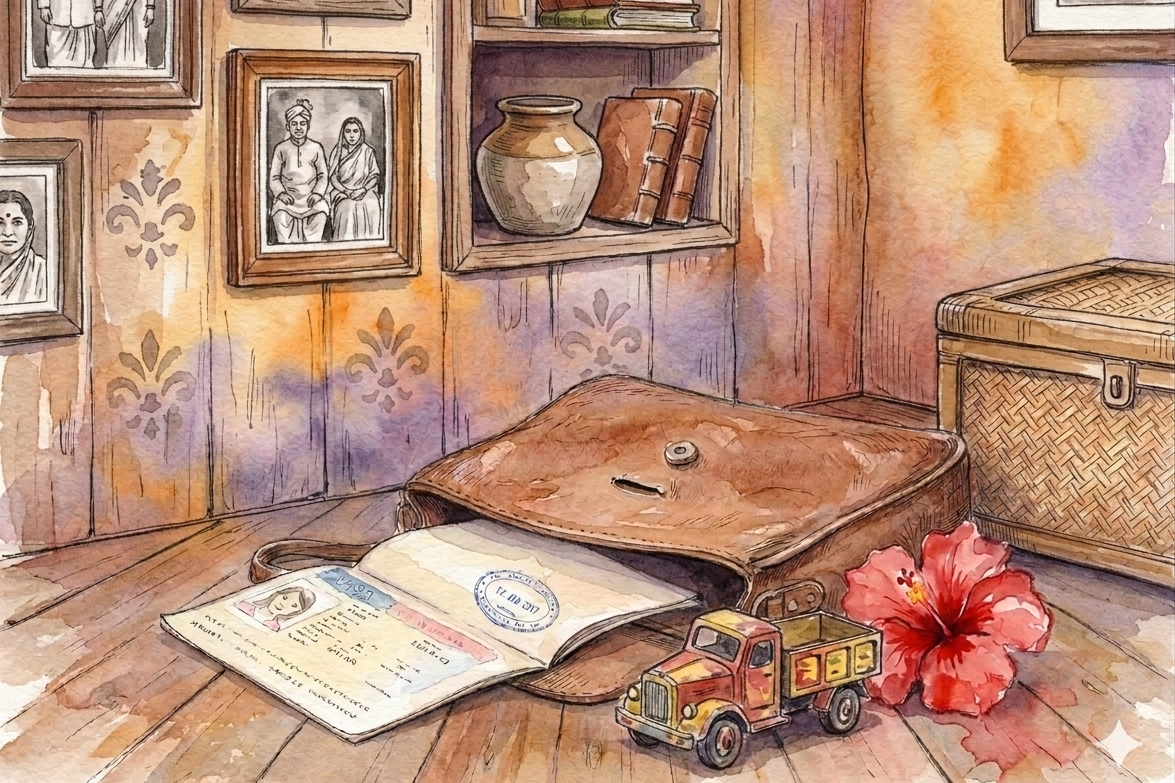
🍷 Flavour Profile
Primary Notes: Dominant flavours of desperation and moral ambiguity
Secondary Notes: Undertones of un-vilified hypocrisy, paired with dwindling and resurgent hope
Tertiary Notes: Dense, heat-soaked textures of India under social pressure
📜 Provenance
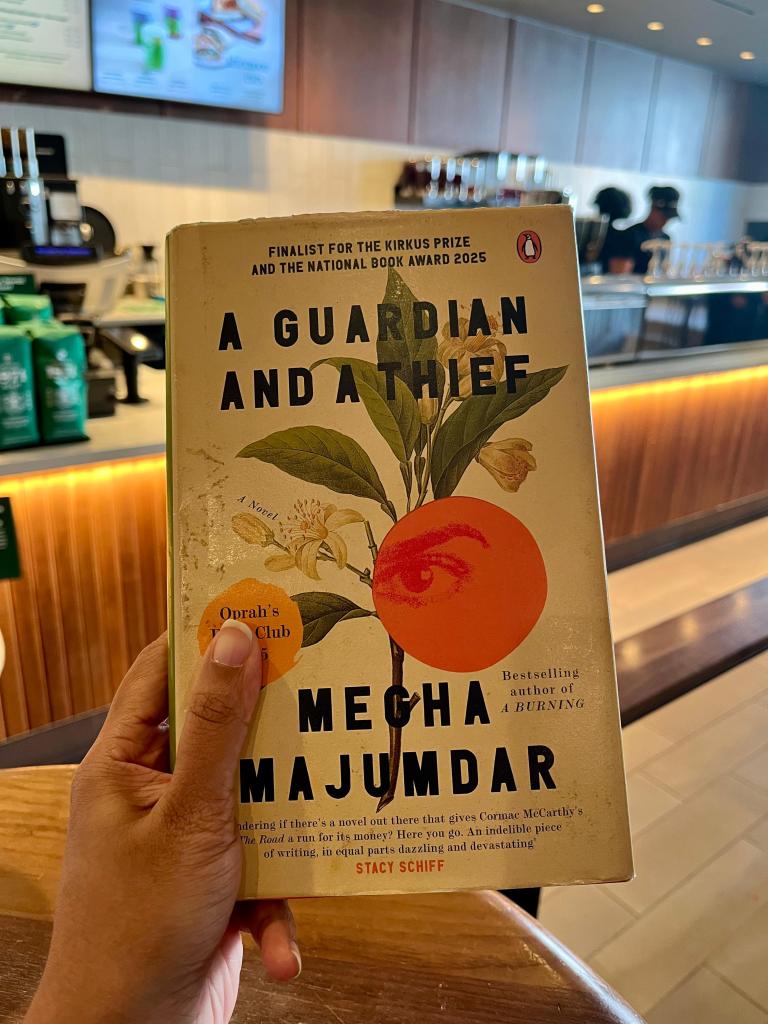
🍽️ Medium: Book | Pages: 224
👤 By: Megha Majumdar
📍 Where I Found It: Oprah’s Book Club | Cousin’s Book Club
🍷 Tasting Notes
From the minute I heard about A Guardian and a Thief through online videos of the author talking to Oprah about the premise, I was hooked. The book boasts a truly novel concept at its centre — the plurality of the human condition exaggerated under the socio-economic pressures of the climate crisis.
Growing up in India, you learn quickly that no one truly avoids poverty. Even if, like me, you come from a place of relative privilege, you are forced to reckon with extreme social inequalities on a daily basis. You see it play out on the streets as people beg for money and food, you see it in your extended families or social circles as people are unable to afford things you take for granted, and you see it in the ethos and the stories of your grandparents or parents — who most likely grew up in a poor India. This establishes the book as immediately and deeply personal to anyone who has known that India – on the edges or in the centre of it.
As early as Chapter 1, you see that the characters are never unidimensional. Protagonists and ancillary characters alike are developed with the same level of attention to their lives.
Ma is always Ma, a guardian and Boomba is introduced as a thief almost immediately. However, a quick scene of Ma stealing food, or Boomba with his little brother forces nuanced consideration from the reader. There is an emphasis on shifting perspectives threaded throughout the plot – like daylight moves through a room. At some point, everyone will be a guardian and everyone will be a thief — depending on who is looking, and when.
What sets the book apart is that the climate crisis is not just its setting. It is the moral and socio-economic engine of the story. The intersectional impact of climate change moves the book beyond the immediate outcomes of food insecurity, resource scarcity, and hunger, and into the slow disintegration of the social fabric itself. It begins to function as a sorting mechanism — determining who gets protected, who gets to start again, and who gets left behind.
Immigration is written with the lived-in texture of personal experience. It is intricate and unflattened. It reads with familiarity that is rare while never betraying the characters. When Dadu speaks of loving Kolkata — of his boyhood-self, his community, the nostalgia of a city that claimed him in his youth — he is disarmingly reminiscent of my own grandfather and the way he speaks of Chennai. The book shows how the hope of immigration can exist on the same plane as the pain of letting home go. It allows the thematic concepts of the story to breathe in the same multi-layered complexity as the characters do.
My only disappointment with the book was the pacing at the end. In the final chapter and a half, the book felt very hurried. It felt like the author was tired of writing and was trying to tie up loose ends as quickly as she could. It was like reading the last chapter in freeze frames, and after the careful pacing of everything that came before, this confused and disappointed me. Though, in discussing this with my Cousins’ book club, I was offered a different perspective – that the abrupt shift in tempo was potentially intentional, meant to illustrate both the fragility of privilege and how quickly things can go wrong. I am not fully convinced, but I am holding room for that possibility.
✨ The Finish
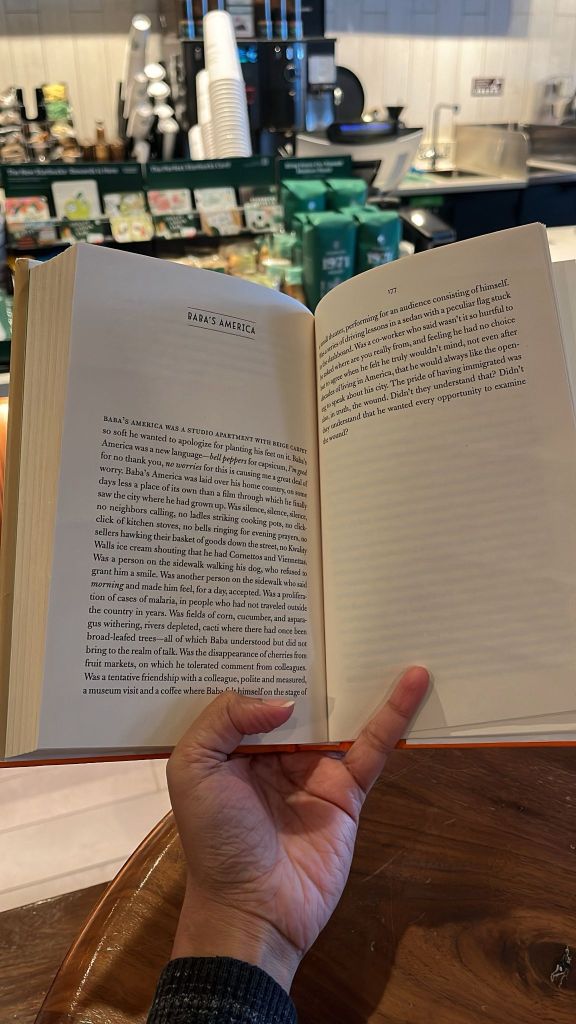
🕯️ What Stayed: “The pride of having immigrated was also, in truth, the wound. Didn’t they understand that? Didn’t they understand that he wanted every opportunity to examine the wound?”
💬 If you asked me: A truly unique plot concept — climate immigration — rendered with the emotional intelligence required to navigate the complexities of the human condition under desperation. The ending falters, but what comes before it earns the patience.
🏷️ Vintage
Released: January 29, 2026 | Read: April 2026
📝 Footnotes:
Where to Find the Book: A Guardian and a Thief
*Some links in this post may be affiliate links, which means I may earn a small commission if you purchase through them, at no extra cost to you.
 The Big Smokey Apple